

Ask people why they avoid the dentist and the word that comes up first is pain. The fear of it shapes decisions long before any procedure is on the table, and it keeps people away from care that would, ironically, spare them worse pain down the road.
A recent survey put a hard number on just how widespread that fear is, and the figure was higher than the profession had assumed.
That finding is worth sitting with for anyone hesitating over implant surgery, because the fear and the reality have drifted further apart than most people realize.
The Number That Surprised Dentists
Researchers at NYU College of Dentistry surveyed a nationally representative sample of about 1,000 adults and found that 72.6 percent reported some degree of dental fear. Nearly half described it as moderate, and more than a quarter called it severe.
That is a sharp jump from older estimates, which had pegged dental anxiety at roughly a quarter of the population. The study, published in the Journal of the American Dental Association, suggests the problem is far broader than the textbooks said.
The researchers traced much of that fear to specific origins, often a painful or frightening experience in childhood that left a lasting imprint. People described being white-knuckled and breaking into a cold sweat decades later.
Crucially, the survey also found that most fearful patients wanted help overcoming the fear. This is not a population that has given up. It is one that is stuck.
Among those with moderate or severe fear, more than seven in ten said they would be interested in a brief, at-home treatment to address it. The appetite for a way out is clearly there, even if the path has been hard to find.
The survey also surfaced where the distrust comes from. Beyond pain, people recalled feeling humiliated, not listened to, or pushed toward treatments they did not believe they needed. The fear is often as much about loss of control as it is about discomfort.
What Implant Surgery Actually Involves
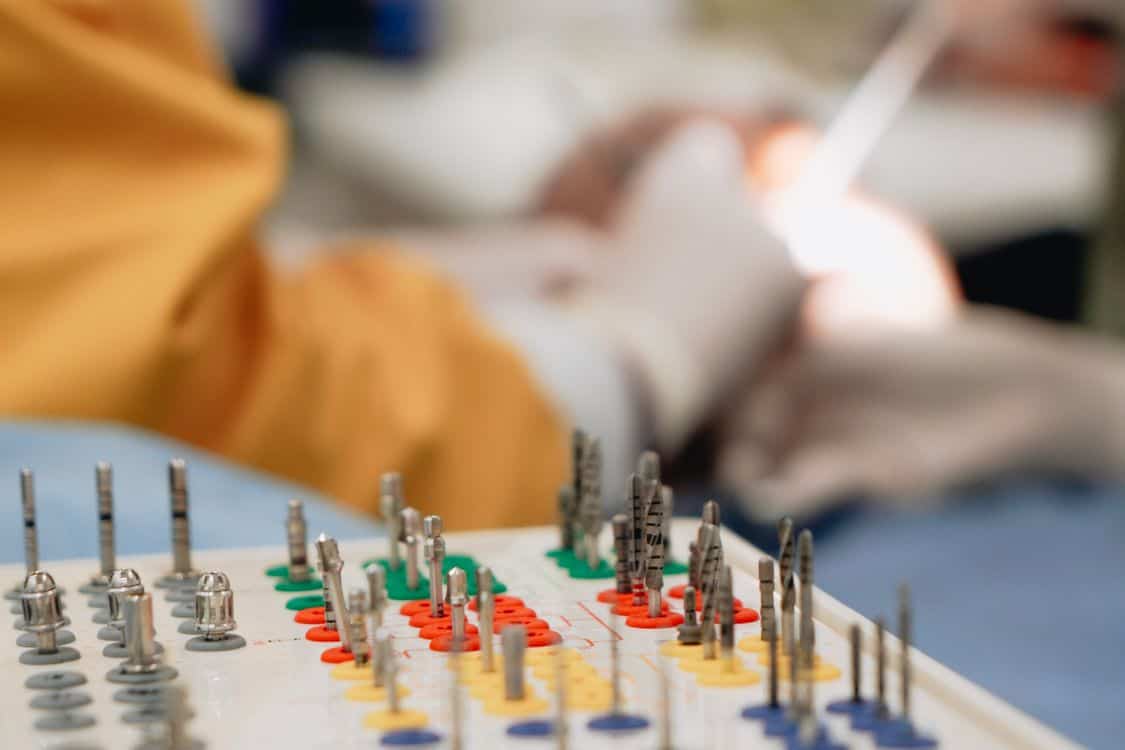 Set the fear against the procedure and a gap opens up. Implant placement is a surgery, but it is performed under local anesthesia, and patients are typically numb throughout the placement itself.
The common report afterward is not severe pain but manageable soreness, the kind handled with standard over-the-counter measures in many cases. Patients in published case work on complex full-arch procedures have described minimal post-operative discomfort.
Sedation options widen the gap further. For patients whose anxiety is the real barrier rather than physical pain, sedation dentistry changes the entire experience of being in the chair.
It is a genuine fork in the road for the severely fearful. The roughly one in four adults who report extreme fear are not exaggerating their distress, and for them the choice is often between sedation and simply never going. Framed that way, sedation is less a luxury than the thing that makes care possible at all.
The honest framing is that the anticipation is usually worse than the event. That is not a platitude. It is what the mismatch between the fear data and the clinical reality actually describes.
What lowers the anticipation is mostly communication. The researchers themselves concluded that many of the negative experiences driving lifelong fear are avoidable through open, transparent conversation between provider and patient. Being told what will happen, and being believed when you say you are anxious, does a great deal of the work.
Why the Fear Itself Is the Thing to Treat
The most important insight from the NYU work is that avoidance feeds a cycle. People who are anxious skip routine care, small problems grow into painful ones, and the eventual treatment is bigger and more memorable, which deepens the fear for next time.
Break that loop and the math improves dramatically. A failing tooth addressed early is a smaller intervention than the same tooth addressed after an infection sets in.
The avoidance also has a cost the whole system feels. Anxious patients are more likely to miss or cancel appointments, which is part of why the profession has started taking the problem seriously rather than treating it as the patient’s private burden. Tools built on cognitive behavioral therapy, deliverable digitally, are now being tested specifically to interrupt the cycle.
For implants specifically, this matters because delay has a physical cost. The longer a missing or failing tooth goes unaddressed, the more the surrounding bone can deteriorate, sometimes complicating the very surgery the patient was dreading.
That is the cruel irony of fear-driven avoidance in this particular case. Waiting does not keep the problem small. It quietly raises the degree of difficulty, so the procedure a frightened patient finally faces can be more involved than the one they could have had years earlier. Acting on the fear tends to make the eventual reality worse, not better.
A provider who takes the fear seriously, explains each step, and offers sedation where appropriate is treating the actual barrier, not just the tooth. The survey’s finding that most fearful patients want help is the encouraging part. The willingness is there.
So the better question is not simply whether implant surgery hurts. It is whether the fear of pain is costing more than the procedure ever would. For a great many of the nearly three in four adults who carry that fear, the honest answer is yes.
Because dental anxiety can be tied to deeper distress for some people, anyone for whom this fear feels overwhelming deserves support, and a candid conversation with a provider is a reasonable first step.