

Cushing, Oklahoma doesn’t get much attention outside the energy industry, but inside it the storage hub is one of the most closely watched indicators in the entire crude market. It’s the delivery point for WTI futures contracts, so what happens to inventory levels there ripples through pricing well beyond the tank farms themselves. As of late July 2026, what’s happening at this oil storage tank hub is a decline analysts across the industry are watching closely.
The numbers behind the decline
The trend has been steady and unmistakable. For the week of July 24, 2026, Cushing stocks dropped to 18.599 million barrels, down from 19.37 million the week prior, a decline of nearly 771,000 barrels in a single week. That pace of drawdown, sustained over multiple weeks, has pushed the hub toward levels not seen in over a decade.
According to EIA data reported at the time, this represents the lowest storage level at the hub since 2014. Cushing’s total shell capacity runs around 90 million barrels, with working capacity closer to 73 million once operational buffers are accounted for, and current stocks sit well below even the lower of those two figures.
Why “tank bottoms” matter more than the headline number
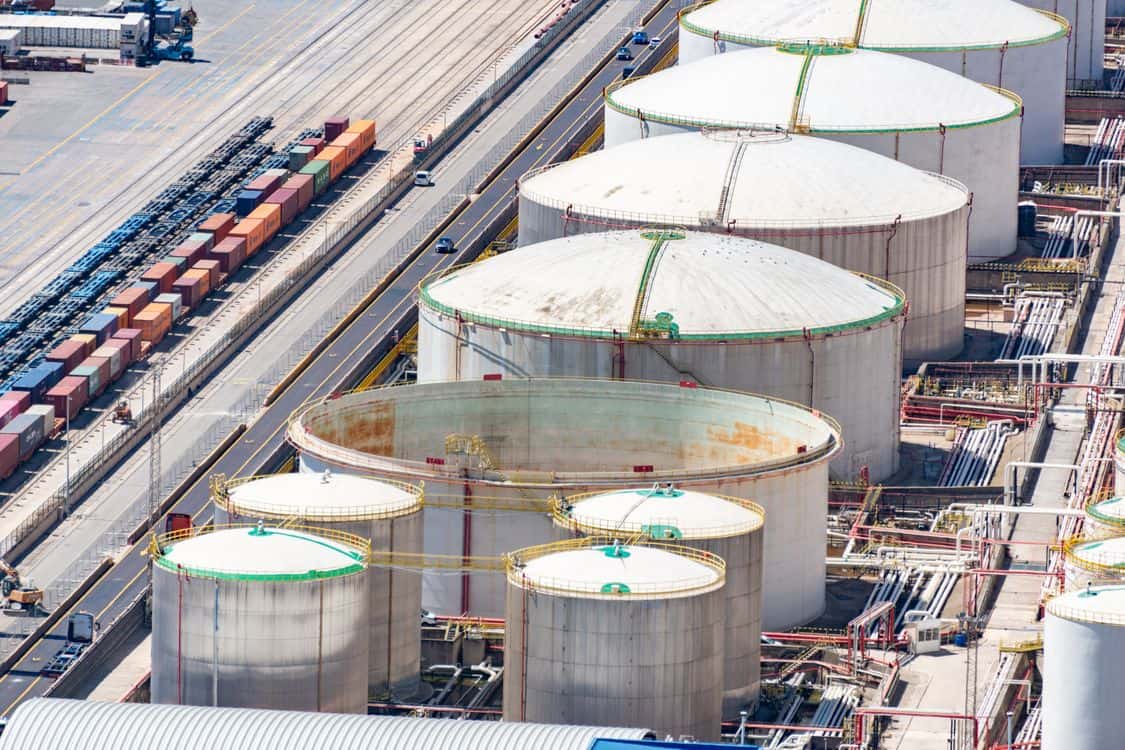 The mechanical detail that makes this more than an abstract statistic involves what the industry calls tank bottoms, the minimum operational volume storage tanks need to maintain to keep pumping systems functioning correctly. Draw a tank down too close to empty and the equipment used to move oil in and out of it starts to have problems, independent of whether there’s technically still capacity on paper.
That’s the distinction between total shell capacity and genuinely usable operating capacity, and it’s why a drawdown toward historically low levels matters more than the raw barrel count suggests. Storage operators care not just about how much room is left in the tank but how much of that room can actually be used without compromising the equipment.
What a multi-year low signals for storage infrastructure
A drawdown this size reflects a combination of factors: strong refinery demand pulling crude out of storage, export flows, production patterns upstream. It puts pressure on the entire logistics chain that depends on Cushing functioning as a reliable buffer point.
For terminal operators elsewhere in the crude supply chain, a multi-year low at the benchmark hub is a reminder that storage utilization doesn’t move in a straight line. Markets that look comfortably supplied for months can tighten fast when demand and export flows align, and facilities without flexible tank configuration, fixed roof versus floating roof, vertical bulk storage versus smaller horizontal tanks for compact sites, can find themselves poorly positioned when conditions shift.
Whether Cushing stocks rebuild through the back half of 2026 or keep testing multi-year lows is now one of the more closely watched questions in the crude market. Either way, the drawdown is a case study in how quickly the buffer storage infrastructure is supposed to provide gets tested, and why tank design decisions made years in advance, corrosion allowance, venting capacity, structural margin, end up mattering most during exactly these stress periods.
Cushing’s outsized importance comes from its role as the delivery point for the New York Mercantile Exchange’s WTI futures contract, so inventory levels there are a direct input into how the benchmark price for American crude gets set. A drawdown toward multi-year lows can tighten the spread between futures contracts of different delivery months, a dynamic traders watch closely because it reflects genuine physical tightness rather than financial positioning.
That price signal cascades outward well beyond Cushing itself. Refiners, exporters, and other storage hubs around the country calibrate their own operations partly based on what Cushing inventory data implies about broader supply and demand balance.
For terminal operators managing tank farms outside Cushing, a benchmark hub running this tight is prompting a re-examination of contango and backwardation dynamics that affect how storage capacity gets contracted and priced. When prompt-month barrels are scarce relative to storage capacity, storage economics shift in ways that can make previously marginal tank capacity more commercially attractive, at least temporarily. Some operators are using the current tightness as a prompt to review tank configuration and condition ahead of what could be a volatile stretch through the rest of 2026, checking that venting systems, corrosion protection, and structural inspection schedules are current.
API 653 in-service inspection requirements have gotten renewed attention too, since a tank running closer to its practical operating minimum has less margin for error if an inspection turns up an issue that requires taking capacity offline.
Some independent terminal operators have also started reviewing lease agreements written years ago under very different market assumptions. A contract priced when Cushing was comfortably supplied doesn’t necessarily reflect what tank space is actually worth in a market this tight, and a handful of operators are reportedly renegotiating storage contracts ahead of their normal renewal dates just to capture the shift before it corrects, if it corrects, later in the year. Whether that pricing holds through the rest of 2026 depends almost entirely on how fast Cushing inventories rebuild.
Downstream, refiners with long-term storage arrangements at the hub are watching their own contract terms more closely too. A refiner that locked in tank space years ago at favorable rates has a real advantage right now over one relying on shorter-term or spot storage arrangements, and that gap in contract terms has become a meaningful competitive factor in a market this tight, not just a line item buried in the operating budget.