

Asphalt shingles are supposed to be the predictable choice. They are the default roof on most Toronto houses, they install fast, and they have historically been the cheapest way to keep the weather out. So when their price jumps, a lot of homeowners notice, because shingles are the one roofing cost people think they can estimate from memory.
That assumption broke heading into the 2026 re-roofing season. A round of manufacturer increases landed in the spring, and it caught people who had budgeted off last year’s numbers, sometimes by enough to stall a project they thought was funded.
Why shingles are not immune to cost pressure
The instinct is to think of asphalt shingles as a cheap, stable commodity. They are not. They are a petroleum product, built on an asphalt mat and layered with mineral granules, and their price tracks both crude oil and the broader cost of moving heavy materials across a tariff-disrupted border.
Industry analysis found that tariffs on imported roofing inputs raised costs 15 to 25% in 2024, and the major shingle manufacturers layered additional spring increases on top heading into 2026. Each individual bump is modest, but they compound.
There is also a seasonal pattern at work. Manufacturers commonly raise prices in spring, just as demand peaks, so a homeowner who shops in April is buying at the least favourable moment of the year.
What a Toronto homeowner actually sees
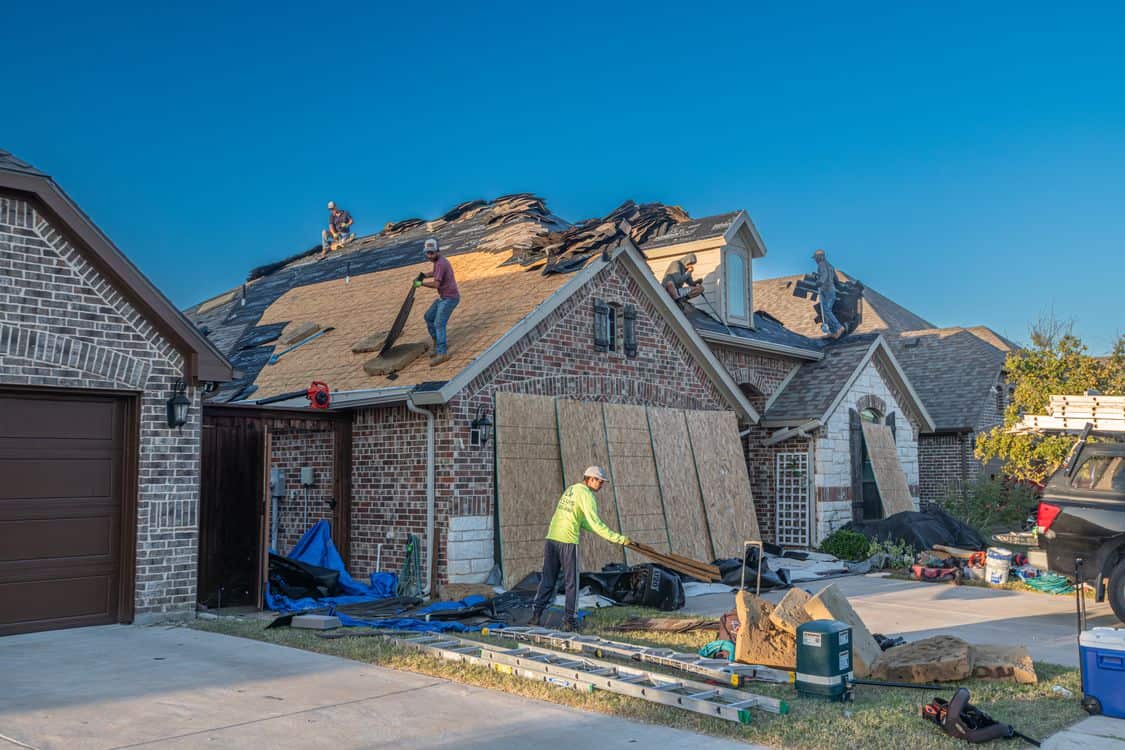 On a typical detached-home re-roof, a manufacturer increase of a few percent does not break the project, but it does eat the cushion. The homeowner who got a ballpark figure last autumn and finally booked the work in spring often found the real quote a bit higher than the number they had been carrying in their head.
The bigger surprises came from what budgets had left out entirely. Plywood replacement where the deck had rotted, proper ice-and-water shield at the eaves and valleys, new flashing, and disposal of the old layers all rose too, and on an older Toronto home several of those are usually needed.
How to budget so the number holds
The fix is a detailed written quote rather than a phone estimate. A real quote spells out shingle line, underlayment, ice-and-water coverage, flashing, ventilation, decking allowance, and disposal, so there are no second-day surprises when the old roof comes off and the crew sees what is underneath.
It also pays to compare quotes that are actually comparable. The cheapest number on a page is often cheapest because it quietly assumes the deck is perfect, includes a thinner underlayment, or skips ventilation work. The fix is to ask each contractor to quote the same detailed scope, so the comparison is fair and the lowest number is not just the one that left the most out.
The shingle is still the value choice
None of this means asphalt has lost its place. For a homeowner who plans to move within fifteen years, or who simply wants the lowest entry cost, a quality architectural shingle is still the sensible pick, and it can perform very well when installed properly.
What changed is that shingles are no longer the set-it-and-forget-it line item homeowners could safely guess at. They move with oil and trade policy like everything else, and the way to avoid being caught out is a precise quote and a crew that prices the whole job honestly, not just the bundles on the truck.